
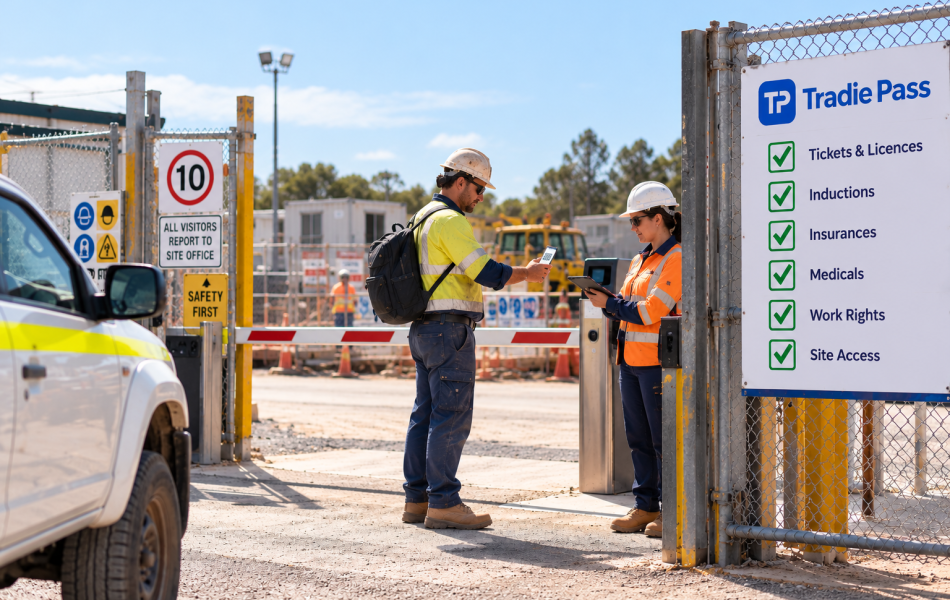
One expired ticket on site can mean a stop-work notice, a failed audit or an uncomfortable conversation with your principal contractor. And with subcontractors coming and going, it’s easy to lose track of who has what, and when it runs out.
This checklist covers what to verify before a subcontractor starts work, what to re-check along the way, and the mistakes that most often catch businesses out. Use it as a starting point and adapt it to your state or territory, your industry and your client requirements.
Note: Compliance rules differ between states and territories and change over time. Always confirm current requirements with your regulator (for example SafeWork or WorkSafe in your state) and your own legal or WHS adviser.
Why subcontractor compliance matters
Under Australian work health and safety laws, businesses have duties to people who work on their sites, not just their own employees. If you engage subcontractors, you are generally expected to take reasonable steps to make sure they are licensed, trained, insured and working safely.
Beyond the legal side, there are practical reasons to get it right:
• Fewer stoppages. Unqualified or unverified workers can be turned away at the gate, or sent off site mid-job.
• Smoother audits. Principal contractors and clients increasingly ask for proof of compliance, not promises.
• Lower risk. Verified licences, insurance and training reduce the chance of incidents and uninsured claims.
• Better relationships. Clear, upfront requirements mean fewer surprises for you and your subbies.
The pre-start checklist
Complete these steps before a subcontractor (or any of their workers) begins work.
1. Business details
[ ] Valid ABN, checked against the ABN Lookup
[ ] Business name and contact details recorded
[ ] Signed subcontractor agreement or engagement terms
[ ] Key contact person for safety matters on their team
2. Licences and qualifications
[ ] Trade licence for the work being done (where required in your state), with the licence number, class and expiry recorded
[ ] High risk work licences where relevant, such as scaffolding, rigging, dogging, crane or forklift operation
[ ] Any other required tickets or certifications, such as working at heights, confined space or electrical safety
[ ] Verification of competency (VOC), where your site or client requires it
[ ] Licence details checked against the issuing body, not just a photo of a card
3. Construction induction (white card)
[ ] Every worker holds a general construction induction card
[ ] Card details recorded and checked
[ ] Confirmation that the card is valid and accepted for the state or territory where the work is happening
4. Insurance
[ ] Certificate of currency for public liability insurance, with the cover amount and expiry date recorded
[ ] Workers compensation insurance (or evidence of an exemption, such as for a sole trader where applicable)
[ ] Any additional insurance your contract or client requires, such as professional indemnity or contract works
5. Safety documentation
[ ] Safe Work Method Statements (SWMS) for high risk construction work, reviewed before work starts
[ ] Risk assessments relevant to the task
[ ] Evidence of the subcontractor’s own safety procedures, where required
[ ] Emergency, first aid and incident reporting arrangements understood
6. Site-specific requirements
[ ] Site induction completed and recorded for every worker
[ ] Site rules, PPE requirements and access arrangements acknowledged
[ ] Drug and alcohol policy requirements explained, where applicable
[ ] Worker list and sign-in method confirmed, so you know who is on site
The ongoing checklist
Compliance isn’t a one-off tick at the start. Things expire, people change and projects evolve. Build these checks into your routine:
What to check
Suggested timing
Licence and ticket expiry dates
Monthly review, with reminders ahead of each expiry
Insurance certificates of currency
Before expiry, and at each contract renewal
New workers added by the subcontractor
Before they step on site
Site inductions
Whenever the site, scope or conditions change
SWMS
When the task, method or risk changes
Overall subcontractor compliance record
At each stage of the project, and before final payment
A good rule: no verification, no site access. It’s far easier to enforce when it’s a standard process rather than a judgement call each time.
Common mistakes that catch businesses out:
Relying on photos and trust. A photo of a licence doesn’t prove it’s current, valid or belongs to the person holding it. Verify the details with the issuing body wherever possible.
Tracking in spreadsheets and inboxes. Spreadsheets get out of date, and documents buried in email threads are hard to find during an audit. When one person leaves, the system often goes with them.
Forgetting about expiry dates. Most compliance problems aren’t missing tickets, they’re tickets that were valid at the start and quietly expired mid-project.
Checking the business but not the workers. A compliant company can still send an unqualified worker. Check at the individual level.
Inconsistent enforcement. If some subbies are held to the standard and others aren’t, you carry the risk and invite disputes.
Poor records. If you can’t show when and how you verified something, in an audit it’s as if you didn’t.
Keep your records audit-ready
When an auditor, client or regulator asks for proof, you should be able to show:
• Who is working on site, and for which company
• Which licences, tickets and inductions each worker holds
• When each one was verified, and by whom
• When each one expires, and how you’re tracking that
• Insurance and safety documents, current and easy to find
If finding that information takes hours of digging, it’s worth improving your system before the audit comes.
Make it easier with the right tools
A checklist is a great start, but managing it manually across multiple subcontractors, sites and expiry dates is time-consuming and error-prone. That’s where workforce compliance software helps.
Tradie Pass lets businesses request, collect, verify and track workers’ tickets, licences and inductions in one place, with expiry reminders so nothing slips through. Tradies keep their credentials in their own app, ready to share when a new job starts, so onboarding is faster for everyone.
We can do the verification for you
Checking documents one by one is the slowest part of compliance, and the part most likely to be skipped when a crew is due on site. At Tradie Pass, we can do it for you. We cross-check workers’ visas, passports and other forms of ID, as well as their licences and certifications, and where possible we verify them through third-party sources rather than relying on a photo or a PDF.
That means:
• Less admin for your team. You don’t have to chase, check and file every document yourself.
• More confidence at the gate. You know what has been verified, not just what has been uploaded.
• A clear record. Verified details and expiry dates sit in one place, ready when an auditor or principal contractor asks.
Ready to stop chasing compliance in spreadsheets? Book a demo or Start your 30 Day Free Trial and see how Tradie Pass keeps your sites audit-ready.
Frequently asked questions
What should a subcontractor compliance checklist include? At a minimum: business details (ABN), trade and high risk work licences, construction induction (white card), insurance certificates, SWMS and other safety documents, and site-specific induction records. Add anything your state regulator or client requires.
How often should I check subcontractor compliance? Before work starts, whenever new workers are added, and regularly throughout the project. Review expiry dates at least monthly, and set reminders ahead of key dates.
Who is responsible for subcontractor compliance on a construction site? Responsibility is usually shared. Subcontractors are responsible for their own workers’ licences, training and insurance, while principal contractors and businesses engaging them have duties to take reasonable steps to verify and manage risk. Confirm your specific obligations with your regulator or WHS adviser.
What happens if a subcontractor’s ticket expires mid-project? The worker may need to stop the relevant work until the ticket is renewed, which can delay the job and create compliance risk. Tracking expiry dates and setting reminders helps you avoid this.
Is a white card enough to work on a construction site? No. A white card is a general construction induction. Many tasks also need trade licences, high risk work licences, site inductions and other training.